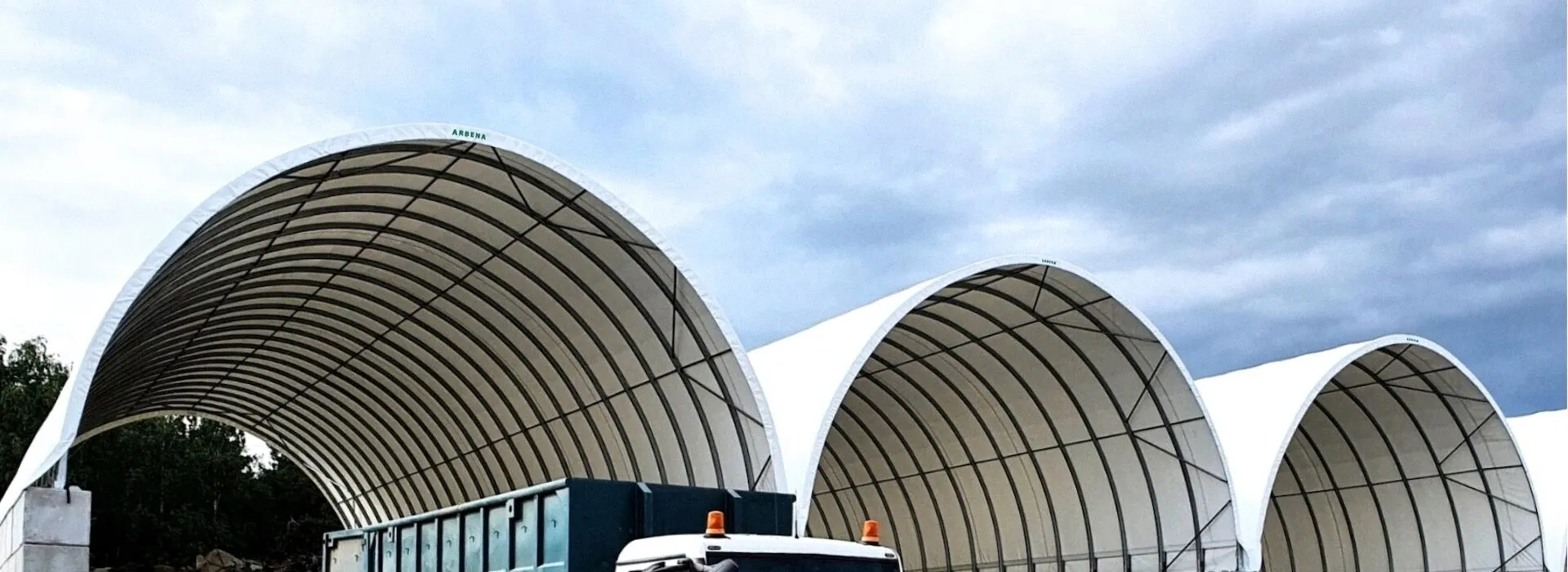
Choosing structural steel looks like a purely technical topic. Buyers hear designations such as S235 or S355, compare offers and assume that steel is steel. Yet this is one of the decisions that most affect how long a building lasts, because the quality of the structure depends not only on the grade, but also on the profile, the workmanship and how the steel is protected against corrosion.
How structural steel is classified
Structural steels are classified under European EN standards. The most common designations start with “S”, for structural steel, followed by the minimum yield strength in MPa. That is where S235, S275 and S355 come from. A higher number means a stronger material, but not automatically a better choice: each grade behaves differently and should be chosen for the application, not just compared in a table.
Carbon steels in industrial buildings
Carbon steels are the most common in building structures, and S235 and S355 are compared most often. S235 suits structures with moderate loads; S355 is used in more demanding designs where higher strength is needed. The grade alone, however, says little about how a building will perform after several years. Profile geometry, weld quality and corrosion protection matter just as much, which is why two buildings made of apparently the same steel can look and perform very differently after a few years.
High-strength low-alloy steels
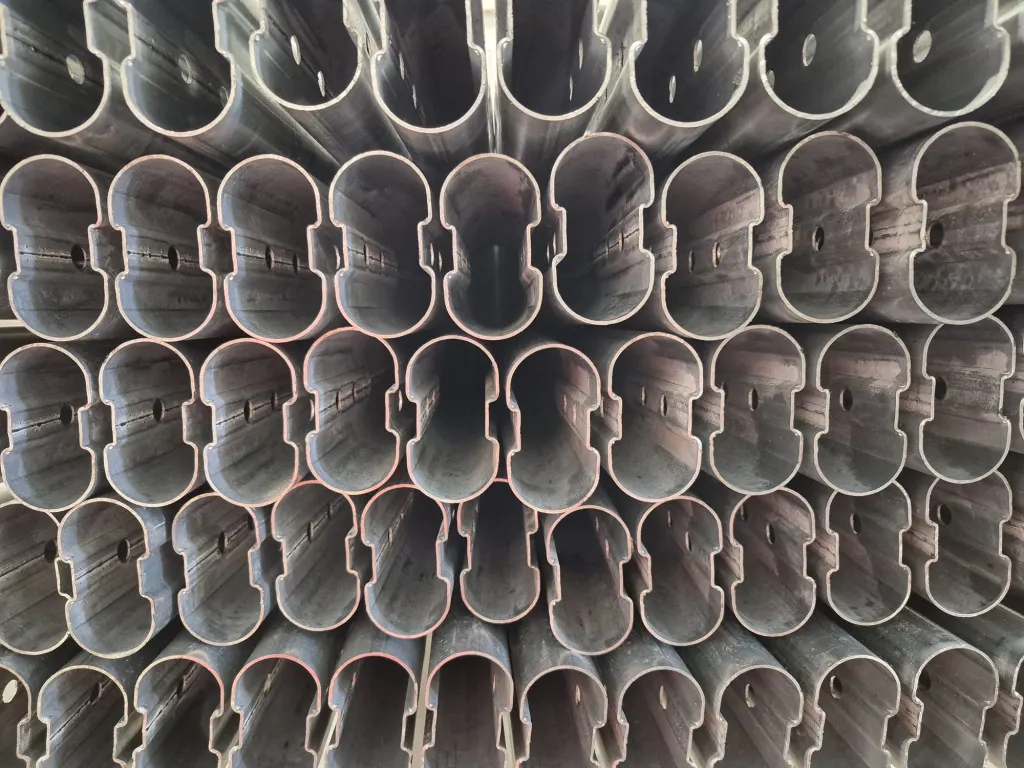
High-strength low-alloy (HSLA) steels give better mechanical properties without adding much weight, which matters where load capacity and resistance to permanent deformation count. ARBENA’s FT150 and FT90 profiles are made of HX420 steel, a higher-strength material that gives a greater safety margin under snow, wind and long-term use.
Weathering steel or a protective coating?
Weathering steel such as Cor-Ten forms a patina that slows further corrosion and is used in some architectural and infrastructure applications. Agricultural, industrial and waste buildings, however, often work in damp or salty environments or with aggressive compounds such as ammonia. There, a durable protective coating over the whole structure matters more, which is why light steel buildings usually combine a suitable steel grade with an advanced coating.
Why strength alone is not enough
A building works for years under moisture, temperature changes and loads. The most vulnerable places are not the large surfaces of the profiles, but the details: welds, cut edges and joints. That is where corrosion usually starts, and where many buyers do not look when they compare S235 with S355.
Magnelis® compared with galvanising
For many buyers, “galvanised” sounds good enough, and for many uses it is. The problem arises in more demanding conditions: farm and livestock buildings, waste halls, damp or salty environments, or contact with aggressive chemicals. ARBENA structures are protected with Magnelis®, a zinc coating with added magnesium and aluminium that forms a denser, more stable protective layer. In the ARBENA system the coating mass is around 430 g/m², while 275 g/m² is common on the market. According to the coating manufacturer, Magnelis® offers about three times the corrosion resistance of galvanised steel and remains effective in aggressive environments, including agricultural, damp, salty and ammonia-laden ones.
- Formed areas: where steel is bent or profiled, a conventional zinc layer can work less well over time and may flake; Magnelis® copes better with this.
- Cut edges and welds: at cuts, perforations and thin welds, the coating forms a protective layer that limits corrosion at the most vulnerable points.
- Hot-dip galvanising of finished parts is a strong classic method, but on complex shapes the zinc layer is not always even: too thin in some places and too thick in others, which increases the risk of flaking.
Why does not everyone use it? Mainly because of the initial cost. It is a choice between a structure that is sufficient today and one designed to keep its properties for years.
Profile shape and structural strength
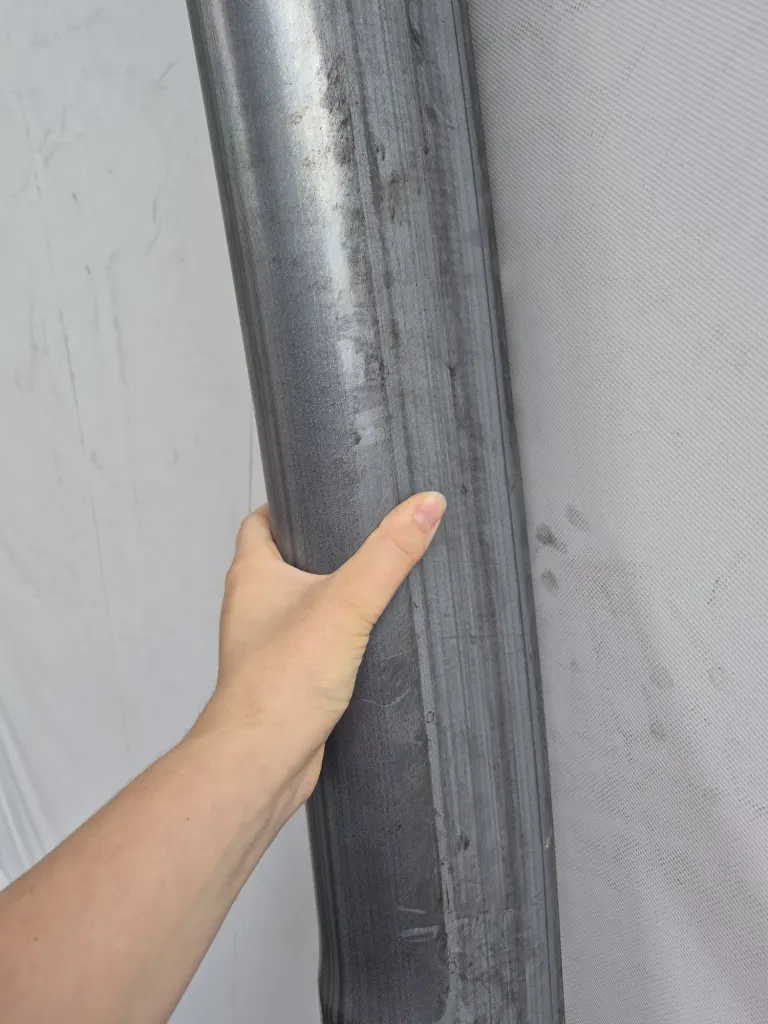
Besides the steel grade, the shape of the profile largely decides how loads are distributed and how the structure behaves under snow, wind and daily use. ARBENA buildings use oval FT150 or FT90 profiles rather than the round or square tubes common in light steel buildings. The oval geometry carries loads well and resists bending and deflection, so the structure keeps its parameters under load and behaves more predictably.
The advantage comes from the combination: the oval profile limits deflection, HX420 steel adds resistance to permanent deformation and load capacity, and the Magnelis® coating protects the structure over time.
How to choose steel for a building project
Start from the conditions in which the building will work, not from the list of grades. A warehouse in a mild environment, a waste hall and a livestock building in contact with moisture and ammonia all need a different approach. Steel strength, coating, profile type and the detailing of the structure should be chosen together as one system. Buildings for waste and recycling are a good reference for demanding conditions.
How to read S235, S275 and S355
“S” stands for structural steel and the number for the minimum yield strength: S235 means at least 235 MPa, S275 means 275 MPa and S355 means 355 MPa. S355 is stronger than S235, but that alone does not make a better building. Higher-strength steels from the HX group are designed for higher load capacity and good formability. Additional symbols after the designation can refer to properties such as impact toughness or weldability.
Summary
The durability of a fabric building depends on the combination of material, profile and corrosion protection, not on the steel grade alone. Choosing a manufacturer is also choosing the material standard of the structure, so ask before you decide which steel is used and how it is protected. More on our technology page.
Not sure which structure suits your conditions? Tell us what the building will be used for and where it will stand, and we will recommend a suitable steel, profile and protection.